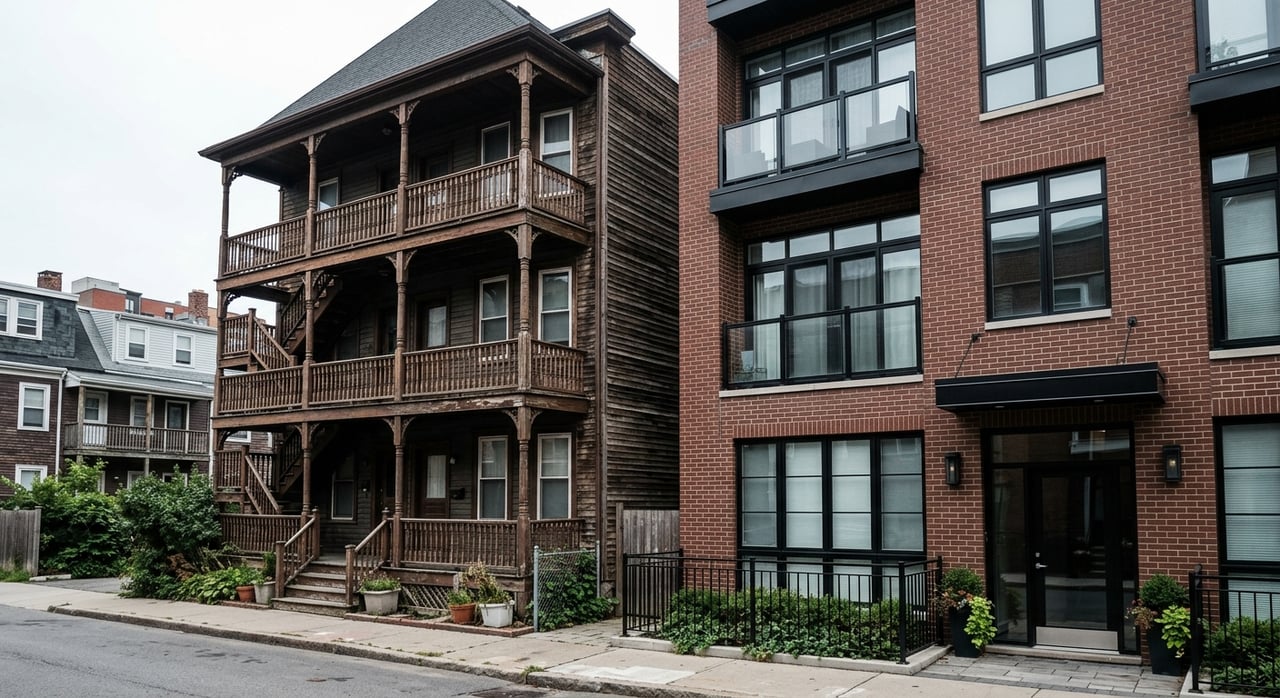
If you’re shopping for a condo in Somerville, you’ll usually find yourself choosing between two very different paths: a converted triple-decker or a newer building. That choice can feel simple at first, but the details matter fast once you compare fees, parking, building systems, and day-to-day convenience. The good news is that Somerville’s housing stock gives you real options, and understanding the trade-offs can help you buy with more confidence. Let’s dive in.
Somerville’s condo market starts with its housing stock
Somerville’s condo inventory is shaped by the city’s existing buildings. City housing data show that the housing stock is concentrated in duplexes and 3 to 4 unit properties, while detached single-family homes make up a much smaller share. The same data also show that much of the owner-occupied housing was built before 1940.
That matters because many condo buyers in Somerville are not comparing one large condo complex to another. Instead, you’re often looking at former 2 to 4 family homes, including triple-decker-style conversions, alongside a smaller set of newer mixed-use or elevator buildings. As a current snapshot, Redfin shows 99 condos for sale in Somerville with a median listing price of $899K.
Converted triple-deckers in Somerville
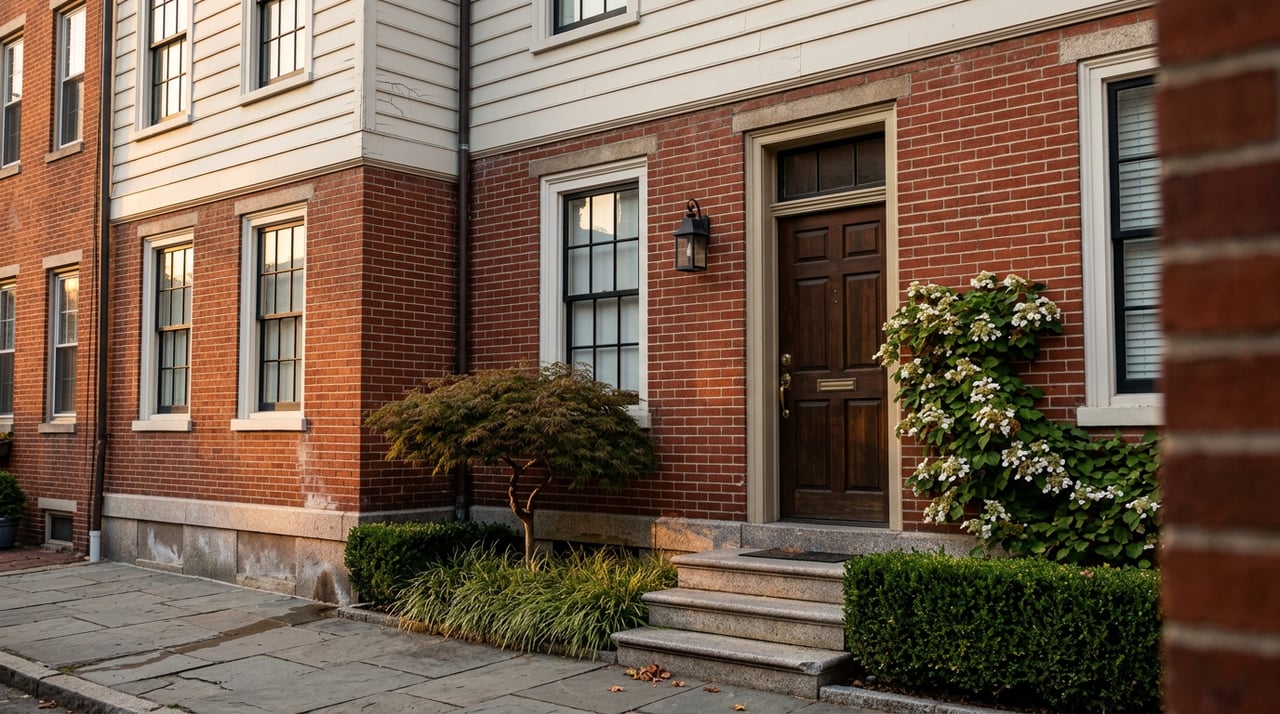
A converted triple-decker condo usually means you’re buying into a smaller association in a building with older bones and more traditional character. In Somerville, that can include features like porches, larger room layouts, extra storage, and a more house-like feel. These homes often appeal to buyers who want charm and private space over a long list of shared amenities.
In many cases, a triple-decker conversion may also come with lower monthly fees than a newer amenity building. Recent listing examples in Somerville show this clearly. A 1910 three-bedroom condo at 94 Conwell Ave lists a $189 monthly HOA that covers water, sewer, insurance, and maintenance of the structure.
That lower fee can be attractive, but it usually comes with trade-offs. Smaller buildings often have fewer shared services, no elevator, and more variability in how the association is managed. You may get private porches or garage parking, but you also may need to be more hands-on when reviewing budgets, reserve funds, and future repairs.
What buyers often like about triple-decker conversions
Many buyers are drawn to the everyday livability of these homes. Depending on the unit, you may find features that are harder to get in a newer building at the same price point.
- Older architectural character
- Private front or rear porches
- Potentially larger room sizes
- Lower monthly HOA fees in some buildings
- Smaller associations with fewer shared common areas
What to look at closely
Not every conversion is the same. One of the most important questions is whether the property is a basic condo conversion, a gut renovation, or something closer to full reconstruction within an older shell.
You’ll also want to understand how the association functions. In a small building, reserve funding, insurance, and responsibility for future work can have a big effect on your true monthly cost. Massachusetts condo law makes the unit deed and condo documents central to understanding common expenses, reserve funds, insurance, and voting rights.
New-build condos in Somerville
Newer condo options do exist in Somerville, but they are not spread evenly across the city. Somerville’s 2025 Housing Needs Assessment says newer development is concentrated in redevelopment areas such as Assembly Square, Boynton Yards, and Union Square. Permitted new housing also clusters on the east and south sides of the city, including areas like Magoun Square, Spring Hill, and East Somerville.
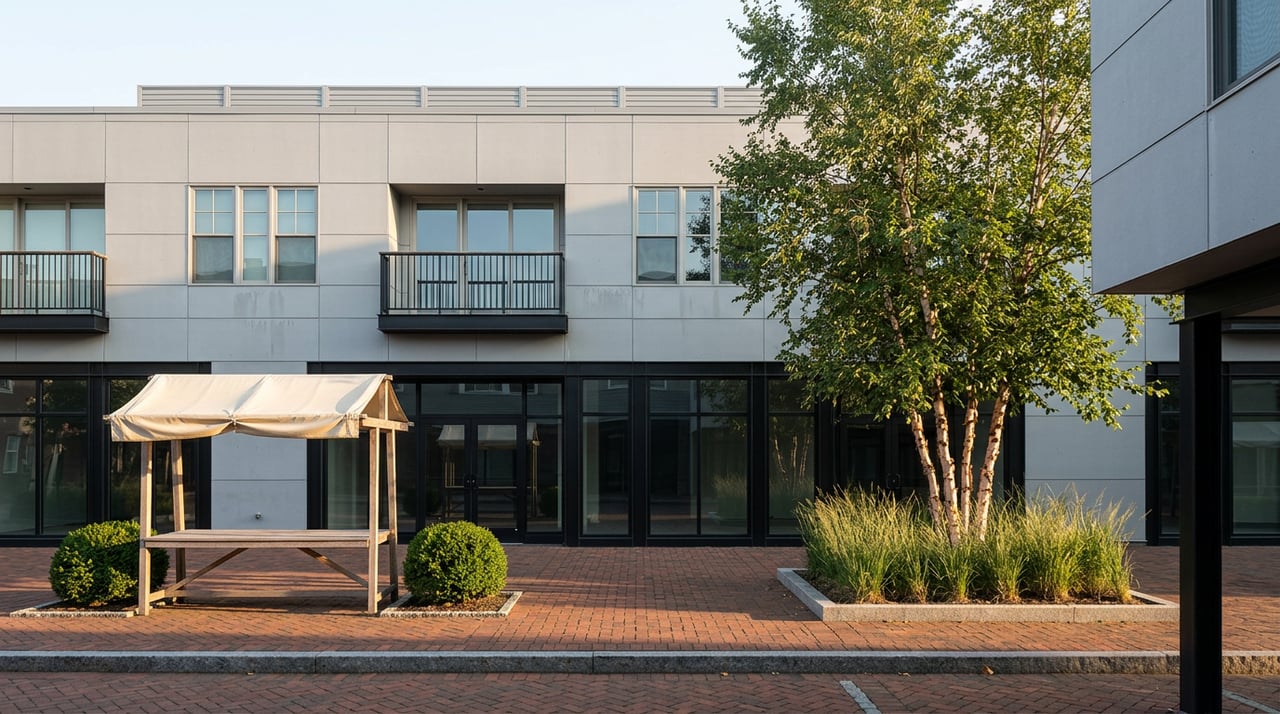
These projects are typically higher-density and often mixed-use. They also tend to include a larger share of smaller units. If you’re hoping for elevator access, modern building systems, and professionally managed common areas, this is usually where you’ll find those features.
Recent listing examples help show the difference. A 2024 one-bedroom at 71 Bow St lists a $430 monthly HOA and includes professional management, hot water, snow removal, landscaping, master insurance, elevator access, bike parking, a roof deck, and solar panels. A 2021 two-bedroom at 13 Alpine St shows a roughly $400 monthly fee with insurance, maintenance, snow removal, trash, reserve funds, elevator access, and storage.
What buyers often like about new builds
For many buyers, newer buildings make daily life feel easier. They may offer a more predictable ownership experience, especially if you want newer systems and less near-term maintenance uncertainty.
- Elevator access
- Professionally managed associations
- Modern heating, cooling, and building systems
- Shared amenities like roof decks or bike parking
- Easier move-in logistics in some buildings
One important note on newer inventory
Some newer condo opportunities in Somerville are shaped by the city’s Inclusionary Housing Program. Since 1990, Somerville has required a portion of new housing developments to include homes reserved for income-eligible renters and buyers. That means some newer condos may be below-market or deed-restricted rather than fully market-rate.
If you are considering one of these homes, be sure to review any resale, occupancy, or eligibility limits carefully. These details can affect both how you buy the property and how you may be able to sell it later.
HOA fees: what really drives the cost
One of the biggest mistakes buyers make is assuming that older equals cheaper and newer equals expensive. In Somerville, monthly condo fees are driven more by the building’s service package, insurance obligations, and reserve funding than by age alone. The right comparison is not old versus new. It is what the fee covers and how the association is planning ahead.
The examples in today’s market make that clear. The older Conwell Avenue condo has a relatively low fee, while newer buildings like Bow Street and Alpine Street land closer to the $400 range. But an older elevator building at 82 Munroe St shows a $535.46 monthly fee because it includes heat, water, sewer, insurance, maintenance, snow removal, trash, and elevator service.
Massachusetts law requires condominiums to maintain an adequate replacement reserve fund as part of common expenses. So when you compare properties, look beyond the headline number. A lower HOA fee can be appealing, but not if it leaves the building underfunded for future repairs.
Questions to ask about HOA fees
- What exactly is included in the monthly fee?
- Is there a professional manager, or is the building self-managed?
- How much is in reserves?
- Are major projects expected soon?
- Does the fee include utilities, insurance, snow removal, or trash?
- Are there amenities like elevators, roof decks, or storage that affect cost?
Parking can change the equation
Parking deserves special attention in Somerville, especially when you’re looking at newer projects. The city says residents of new housing developments in Transit Areas are not eligible for on-street parking permits, although certain residents can apply for a waiver. The rule applies to both entirely new buildings and redeveloped buildings that add units.
Somerville also repealed minimum parking requirements for most of the city in its 2019 zoning overhaul and established parking maximums near rapid-transit stations. In plain terms, you should never assume a condo comes with practical street parking just because it is in a residential area. You need to verify whether parking is deeded, rented, off-site, shared, or limited by city rules.
For some buyers, this is the deciding factor between a triple-decker conversion and a new building. A converted property may offer garage or driveway parking in some cases, while a newer building may offer convenience inside the building but fewer simple parking options outside it.
How to compare the two options
The best Somerville condo for you depends on how you live, not just on what looks best online. A triple-decker conversion may fit if you value character, outdoor space, and potentially lower monthly carrying costs. A newer building may fit better if you want elevator access, newer systems, and a more managed ownership experience.
Here’s a practical way to compare them during your search.
| Feature | Converted Triple-Decker | New Build |
|---|---|---|
| Building style | Smaller, older multifamily conversion | Higher-density, often mixed-use |
| Character | Often more original detail and charm | More modern finishes and systems |
| HOA fees | Sometimes lower, but varies widely | Often higher, depending on services |
| Amenities | Usually fewer shared amenities | More likely to include elevator, roof deck, bike storage |
| Management | Often smaller or self-managed associations | More likely professionally managed |
| Parking | May include driveway or garage in some cases | Must verify carefully, especially in Transit Areas |
| Due diligence | Focus on conversion quality and reserves | Focus on fee structure, parking, and restrictions |
Due diligence matters in both categories
No matter which path you prefer, strong due diligence is what protects your budget and your lifestyle after closing. In Somerville, buyers should ask whether a home is a condo conversion, a gut rehab, or ground-up construction. That distinction affects how you think about systems, maintenance, and long-term risk.
If the building was recently converted from rental use, there may be more documentation to review. Somerville’s Condominium Review Board must grant a conversion permit before rental units can be removed from the market. The Board’s 2025 ordinance update also strengthened notice and relocation requirements for some conversions.
It is also smart to review the condo documents with a close eye on reserve funds, common expenses, insurance, and voting rights. If a property is inclusionary or deed-restricted, make sure you understand any occupancy or resale limits before you move forward.
Why local guidance helps in Somerville
Somerville’s condo market is not one-size-fits-all. Two homes with similar asking prices can offer very different ownership experiences once you account for HOA structure, parking, reserve funding, and the type of building you’re actually buying into. That is why hyper-local context matters so much here.
When you work with a team that knows Somerville block by block, you can compare more than square footage and finishes. You can weigh the real trade-offs between charm and convenience, lower fees and stronger reserves, or a classic conversion and a newer redevelopment-area building. That kind of local perspective can make your decision clearer and your purchase more confident.
If you’re weighing Somerville condos and want a clear-eyed view of converted triple-deckers versus new builds, Lauren Holleran can help you compare options, understand the paperwork, and focus on the homes that truly fit how you live.
FAQs
What is a converted triple-decker condo in Somerville?
- A converted triple-decker condo is usually a unit in a former 2 to 4 family building, often with older character, smaller associations, and fewer shared amenities than a newer condo building.
Where are most new-build condos located in Somerville?
- Somerville’s 2025 Housing Needs Assessment says newer development is concentrated in places like Assembly Square, Boynton Yards, Union Square, and parts of the east and south sides of the city.
Are HOA fees lower in older Somerville condos?
- Not always. In Somerville, fees vary based on what the association covers, the building’s insurance and maintenance needs, elevator service, and reserve funding, not just the age of the property.
Do new-build condos in Somerville come with parking permits?
- Not necessarily. The city says residents of new housing developments in Transit Areas are not eligible for on-street parking permits, though some residents may qualify for a waiver.
What should buyers review before buying a Somerville condo?
- Buyers should review whether the property is a conversion, gut rehab, or ground-up build, what the HOA fee includes, reserve strength, upcoming capital projects, parking details, and any deed or occupancy restrictions.